



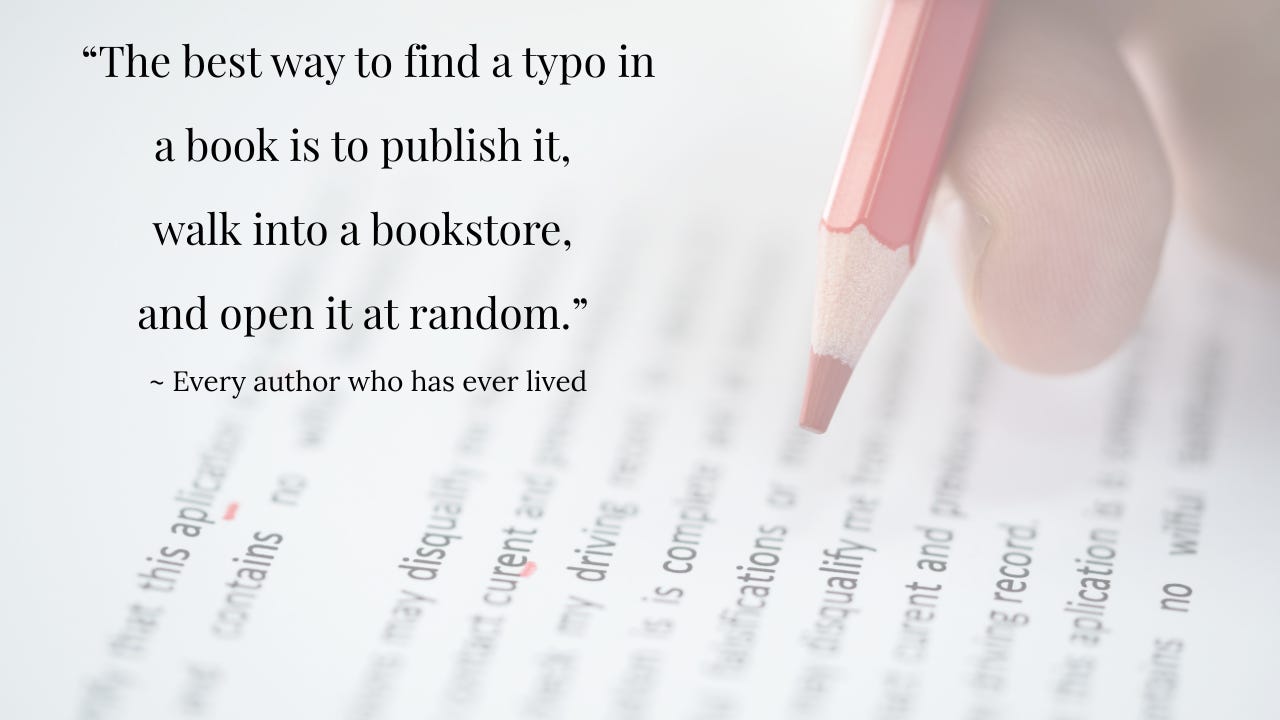
Some people hate editing, but I love it. The words have already been dragged from the depths, wrestled into submission, and placed on the page. I love the clean, focused feeling of taking that text to the next level and making it shine. This is fortunate since I make my living as a freelance editor.
However, my love of editing is not as helpful when it comes to my own writing. I love editing so much that, for a couple of years, I used it as an excuse not to write. Moving existing words around felt far safer and easier than facing a blank page and producing new ones. I know now that in order to move forward, I need to embrace what Anne Lamott dubbed “the shitty first draft.”
But when you are ready to publish, whether it be self-published or traditional, it is important that you get your text into the best possible state before releasing it to the world.

Some people, like me, have developed what feels like a natural ability to spot errors. Sometimes I wish I could switch this off. Coming across multiple errors in a published text makes it hard for me to fully enjoy what might otherwise be an engaging story.
This tendency was also a hindrance in my dating days, as anyone who could not construct a grammatically correct dating profile was an instant swipe left. But maybe that’s for the best—my boyfriend of three years is also an editor with a distaste for errors! Just last night, he was groaning over readers pointing out misplaced commas and incorrectly hyphenated compound words in a book that he worked on. No matter how carefully a manuscript is edited, some people with nothing better to do will take enormous pleasure in finding surviving mistakes and telling you about them.
This is why it is so important to get a second set of eyes on your writing. When we read our own texts, our brains “helpfully” fill in missing words, skip over repetitions, and show us what we intended to write rather than what actually made it to the page.
Memoirists face an additional problem: we are handicapped by actually having lived through the experiences. Because the whole story and context exist in our minds, it is easy to mistakenly assume that all the necessary information has reached the reader.
My favorite example was when I had the privilege of being mentored by the immensely insightful Daniel Khalastchi, executive director of the University of Iowa’s writing program. After Danny had read the story of my engagement, wedding planning, and honeymoon he asked, “Did I miss something? Where do you talk about the wedding?” I had somehow completely neglected to include that rather significant part of the story. “Readers are going to want to see that,” he said.
Oops!
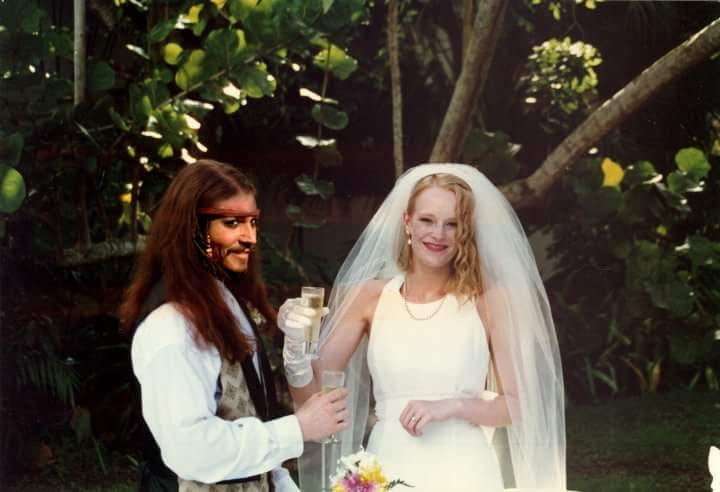
The missing wedding is one of the reasons I believe it is so important to hire an editor, seek beta readers, share in a writing community, or somehow get your words reviewed before publishing. We all have blind spots that make us uniquely incapable of seeing our work as it actually appears to someone encountering it for the first time.
Though it may not help you identify the missing weddings, the best tool for self-editing is free: reading your work out loud. It is especially revealing when someone else is listening. If you haven’t tried it, you’ll be amazed at how well this works. Awkward phrasings, missing and repeated words, and rambling sentences that have gone on a walkabout are suddenly much easier to spot when read aloud. Which is why it took me far longer to record this than it should have! I spotted no less than three of these issues as I was reading it.
My favorite class in the University of Iowa’s writing program was The Art of Revision. The instructor taught us how useful it could be to edit in layers rather than trying to fix everything at once. On one pass, look only at the big picture: Is the structure working? Are important scenes missing? Does the reader understand what is at stake? On another pass, focus on repetition, ask yourself with each scene and paragraph whether it adds to the overall story or if it is simply a retelling or a repetitive example that doesn’t reveal more about you or the narrative. If it’s not moving the story forward cut or combine it. This is the part where you use Stephen King’s famous and painful advice on “killing your darlings.” Finally, and it breaks my editor heart to say it, save commas, hyphens, verb tense, point of view, and tiny sentence-level corrections for later. There is little point polishing a paragraph that may not survive the next structural edit.
If this post saved you from polishing a paragraph that should have been cut three drafts ago, consider becoming a free or paid subscriber. It helps support more writing advice, editing insights, and cautionary tales from my own memoir.
Changing the way that you look at your manuscript can also stop your brain from sliding over familiar sentences quite so confidently. Try printing your manuscript. I keep meaning to do this for the boost of seeing it all on paper if nothing else. Alternatively, try reading it on a different device or changing the font. (By the way, I’ve read that the dreaded Comic Sans font is a great cure for writer’s block.)
For more advice on editing, check out Reedsy’s upcoming conference, Layer by Layer: How to Edit Your Book. The conference will include advice from seasoned editors from Big 5 publishers. What they’ll cover:
The different types of editing – and why each one matters
How to self-edit effectively before working with a professional
Practical advice for refining your writing in multiple stages
How to get the most out of working with an editor
Reedsy has again offered my readers 10% off the conference. Use my link and the promo code “CHRISTINA10” to receive 10% off (full disclosure, I get a small commission if you use my promo code).
Hope to see you there! It sounds like a great opportunity to strengthen the work I do for my clients, and as a bonus, it’s a professionally sanctioned way to procrastinate writing my own memoir!


